
What Event Agencies Are Actually Selling in 2026?
The most profitable event formats agencies are selling in 2026 include GPS city challenges, corporate team-building adventures, university onboarding games, educational escape experiences, conference engagement games, indoor team challenges, multi-city competitions, branded corporate experiences, Amazing Race-style events, and bespoke story-driven experiences.
These formats succeed because they are scalable, repeatable, highly customizable, and capable of generating recurring revenue from corporate, educational, and public-sector clients.
1. GPS City Challenges
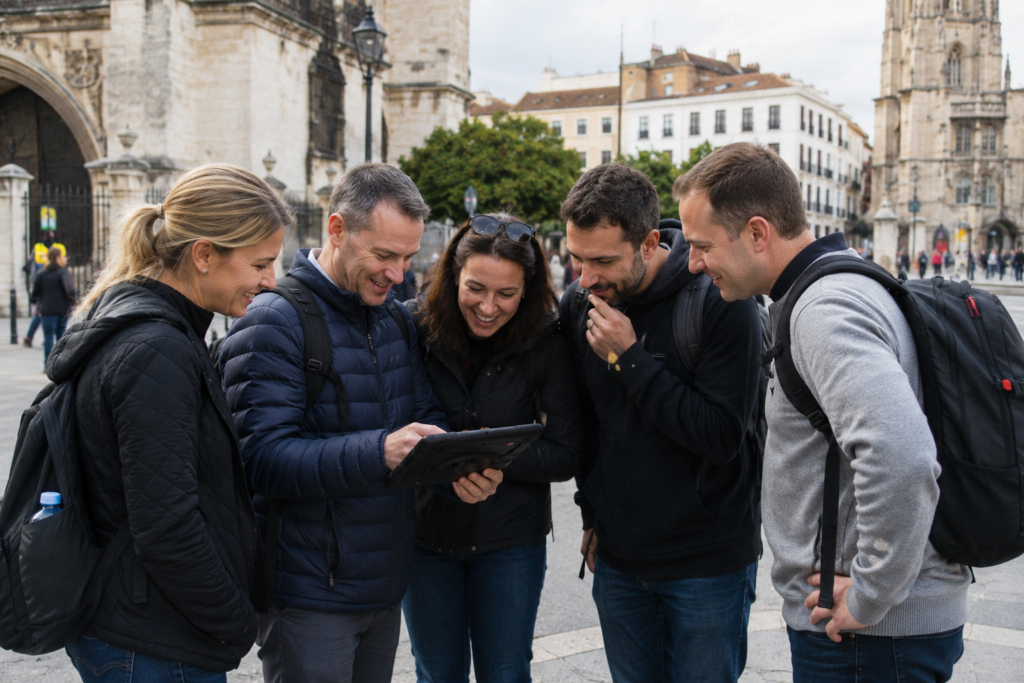
The most popular format on the platform — and the one most agencies launch with first.
Teams navigate a city using GPS, unlock challenges at landmarks, complete missions, solve puzzles, and compete on a live leaderboard visible to everyone in real time. MooveXR handles all of this natively: route logic, geofencing, timed unlocks, and scoring are built into the platform without any custom development.
Why clients buy it
It is easy to sell because it is easy to explain. The format is instantly understood by any corporate buyer. It works in any city, scales from 10 to 1,000+ participants, and delivers a social media-ready experience with photos and videos captured directly inside the app.
Typical use cases
- Corporate treasure hunts during offsites
- City races for incentive groups
- Afternoon activities at conferences
- Welcome events for new employees
The agency opportunity: A city challenge built once for a client in Barcelona can be reworked in 30 minutes for a client in Amsterdam. Agencies building a library of destination-ready challenges across multiple cities turn this into a genuine product line.
2. Corporate Team Building Adventures

A more structured format designed specifically around measurable team performance rather than exploration.
Where a city challenge is primarily competitive, a team building adventure is engineered to surface communication gaps, leadership dynamics, and decision-making under pressure. Agencies position this as a facilitated experience with a debrief, not just a game — which justifies significantly higher pricing.
Typical mechanics
- Sequential team challenges that require coordination across roles
- Gadgets and physical objects integrated with digital missions
- Alliance-building and negotiation rounds
- Scoring that rewards strategy, not just speed
- Video and photo missions used for post-event storytelling
The agency opportunity: This format appeals to HR buyers and L&D teams, not just event planners. Agencies able to bridge these two conversations — "this is a team building tool, not just an activity" — expand their client base considerably.
3. University and Campus Exploration Games
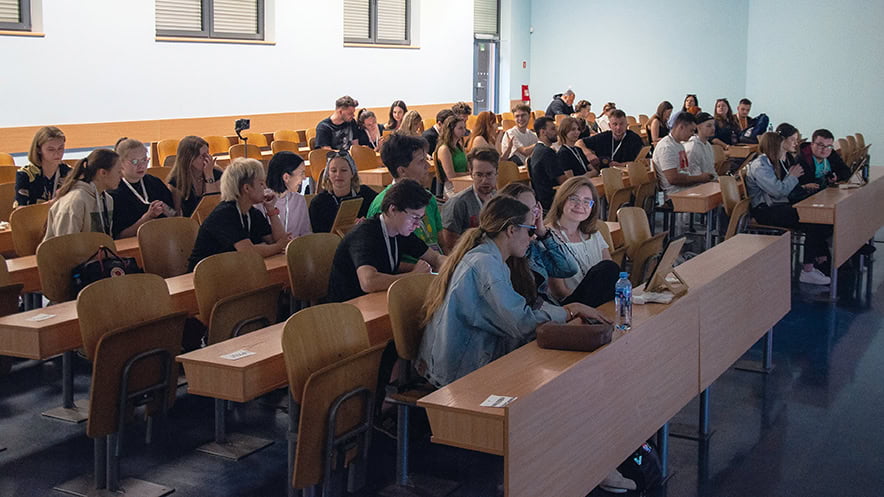
One of the most underserved formats on the market, and one where MooveXR has genuine competitive advantage over anything universities could build themselves.
Universities use MooveXR to transform induction weeks into interactive experiences. Instead of handing new students a map and a timetable, they move through a gamified mission: discovering the library, the student union, the sports facilities, and the support services through challenges, quizzes, and photo missions — all while meeting classmates and forming bonds.
Benefits documented by partners
- Significantly higher engagement versus passive orientation formats
- Faster campus navigation confidence among new students
- Better retention of key institutional information
- Natural social mixing that structured introductions rarely achieve
The agency opportunity: This is a recurring annual contract. Once built, the experience runs every September. Partners working with multiple universities compound the return on every hour spent building the format.
4. Educational Escape Experiences
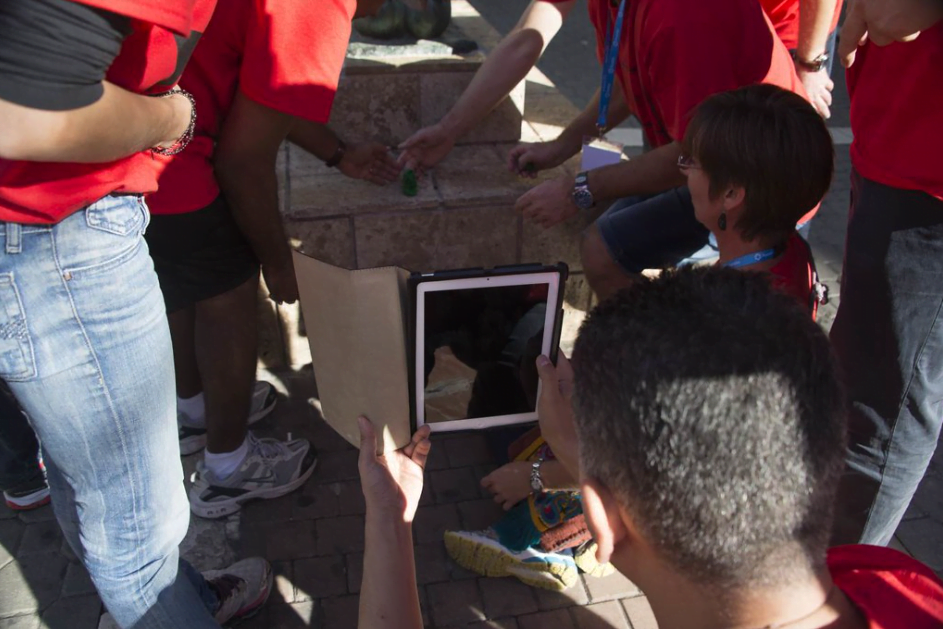
One of the fastest-growing formats outside traditional corporate events — and the one with the most diverse client base.
Participants solve interconnected challenges while absorbing information on a specific topic. The game mechanics do the pedagogical work: because participants need the information to progress, engagement is intrinsic rather than forced.
Topics agencies are deploying this format for
- Cybersecurity awareness and phishing prevention
- Online safety for young people
- Sustainability and ESG commitments
- Workplace compliance and onboarding
- Public health campaigns
- Financial literacy
Partners have identified this format as an expansion path into government-funded educational projects — a market that is less seasonal than corporate events, operates on longer contract cycles, and carries different (often larger) budgets.
The agency opportunity: Government and public sector clients rarely go back to traditional formats once they experience the engagement gap. Agencies that crack one public sector client with this format tend to expand quickly through referrals.
5. Conference Engagement Games
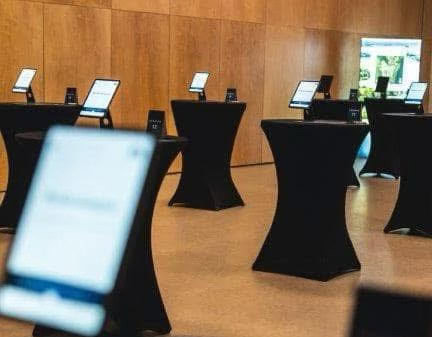
The format that solves one of the biggest problems in the events industry: passive audiences.
MooveXR transforms conference attendees from spectators into participants. The app runs alongside the programme — not instead of it — layering challenges, questions, and activations onto what is already happening in the room.
Common applications
- Knowledge retention quizzes tied to keynote content
- Sponsor activations with branded challenge stations
- Networking missions that give people a reason to approach strangers
- Product discovery trails across exhibition floors
- Meeting icebreakers and energisers between sessions
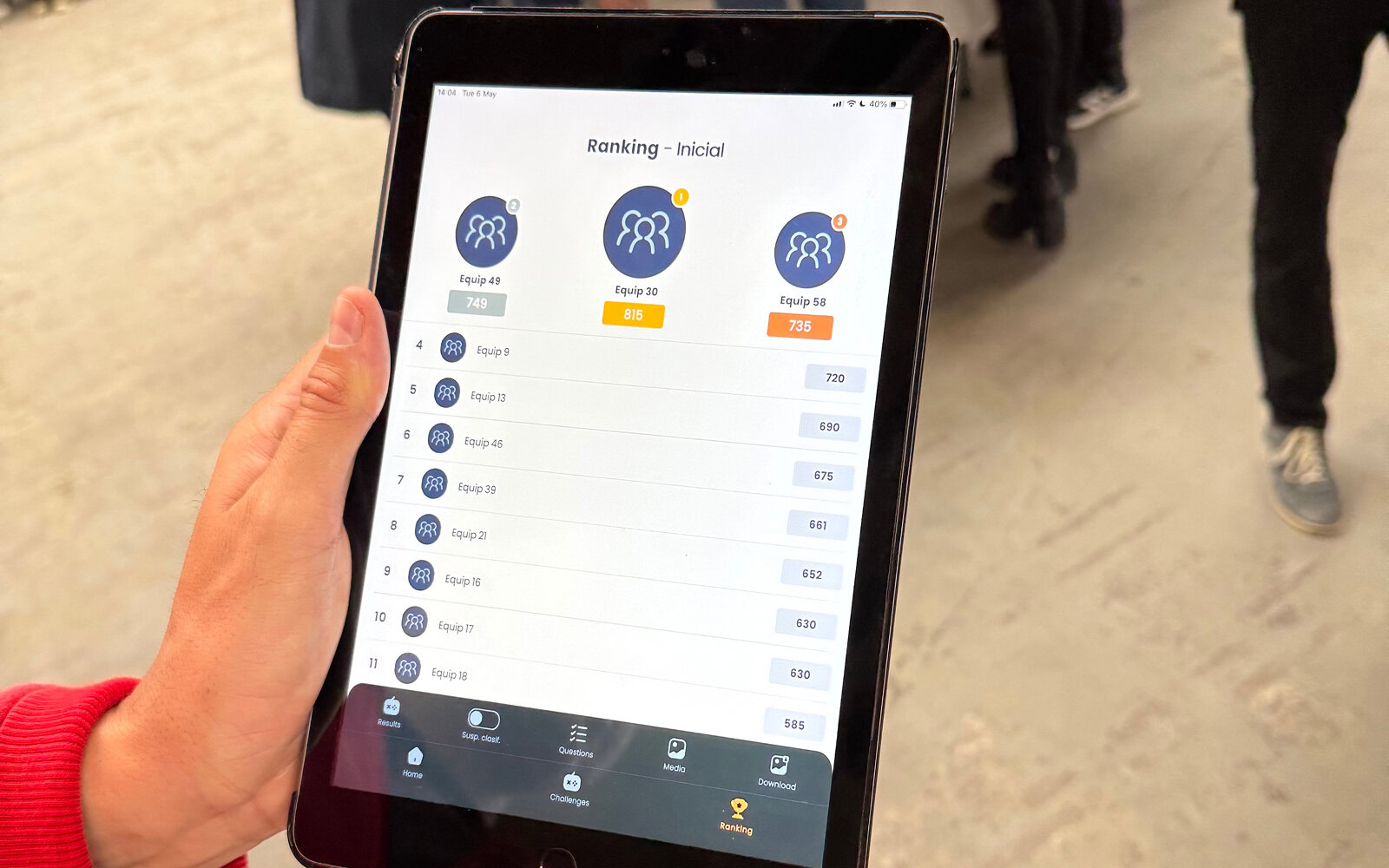
The live leaderboard is particularly powerful in this context. When a screen in the main hall shows team rankings updating in real time, the energy in the room changes immediately.
The agency opportunity: Conference organisers are often repeat clients with multiple events per year. Once an agency proves the engagement model at one conference, rolling it out across a client's annual event calendar is a natural upsell.
6. Indoor Team Challenges
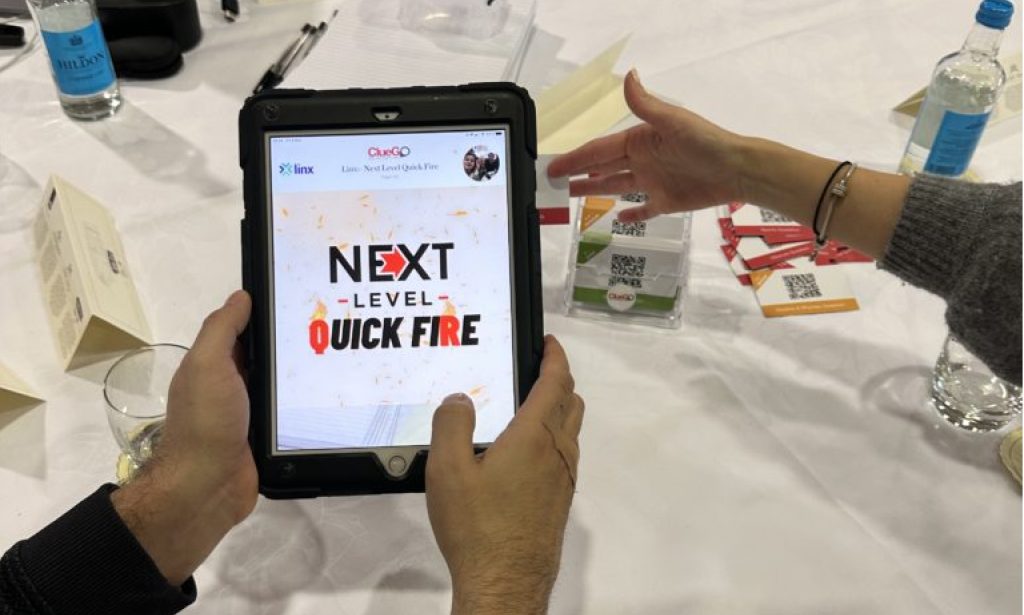
Not every client has the budget, weather, or logistics for outdoor events. MooveXR supports fully indoor experiences using QR codes, NFC tags, image recognition, and embedded mini-games — no GPS required.
The indoor format opens the platform to venues that GPS cannot reach: office buildings, convention centres, historic properties, industrial spaces, and hotel interiors.
Popular indoor formats
- Escape game experiences across multiple rooms or floors
- Murder mystery investigations with digital evidence trails
- Quiz competitions with real-time team scoring
- Corporate strategy simulations with branching decisions
- Onboarding journeys through office spaces
The agency opportunity: Indoor formats extend the business into months and conditions where outdoor events are impractical. Agencies with a strong indoor portfolio are less exposed to seasonal revenue dips.
7. Multi-City Corporate Competitions

The format that has grown most rapidly alongside the normalisation of hybrid and distributed work.
Global companies want teams from London, Singapore, São Paulo, and Chicago to compete simultaneously — playing their own local version of the challenge while contributing to a shared global leaderboard. Every team experiences the event locally, but the competition is worldwide.
Why corporate buyers choose this format
- Inclusive: everyone participates regardless of location
- Sustainable: eliminates travel costs and carbon footprint
- Culturally flexible: local content can be adapted per city
- Measurable: real-time data shows participation and engagement across offices
Partners have delivered this type of experience at scale across multiple countries, establishing it as one of the platform's most commercially compelling formats for multinational accounts.
The agency opportunity: One contract becomes multiple deployments. The content infrastructure built for one city is reused and adapted, while the client invoice reflects the full multi-market scope.
8. Branded Corporate Experiences
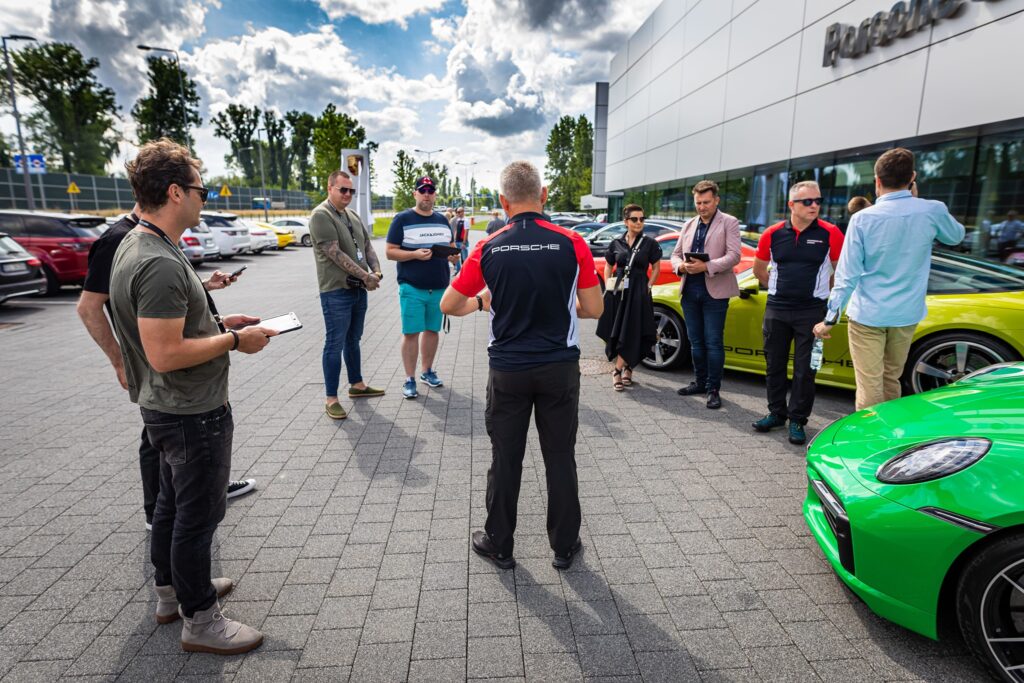
The format that turns MooveXR from a platform into a marketing channel.
Everything inside the experience can be adapted to a client's brand universe: maps styled around office locations, challenges written around company values, missions referencing product launches, and leaderboards carrying the client's visual identity. Participants experience the brand without being lectured at.
Common client objectives
- Communicating company values in a memorable way
- Supporting product launches with sales teams or partners
- Reinforcing employer branding during onboarding
- Driving internal communication around strategic priorities
- Expressing corporate culture to new hires or acquisitions
The agency opportunity: Branded experiences command a creative premium. Agencies positioned as experience designers rather than activity providers justify higher day rates and longer planning timelines — both of which improve margin.
9. Amazing Race Experiences
Inspired by the television format, these are high-energy competitive experiences combining GPS navigation, route strategy, physical challenges, and hidden missions — typically sold as premium incentive activities or executive events.
What separates this format from a standard city challenge is the narrative tension and strategic layering. Teams do not simply follow a route. They make decisions about which checkpoints to hit, manage time against a countdown, and encounter unexpected diversions.
Format mechanics
- Progressive route unlocking based on performance
- Hidden bonus missions revealed only to teams who find them
- Alliance and sabotage mechanics between teams
- Checkpoint challenges that mix physical, creative, and cognitive tasks
- Dramatic finale with real-time scoring revealed live
The agency opportunity: Incentive clients spend more per head than standard team-building clients. This format sits naturally in a premium tier, often bundled with facilitation, production, and post-event content packages.
10. Bespoke Story-Driven Experiences
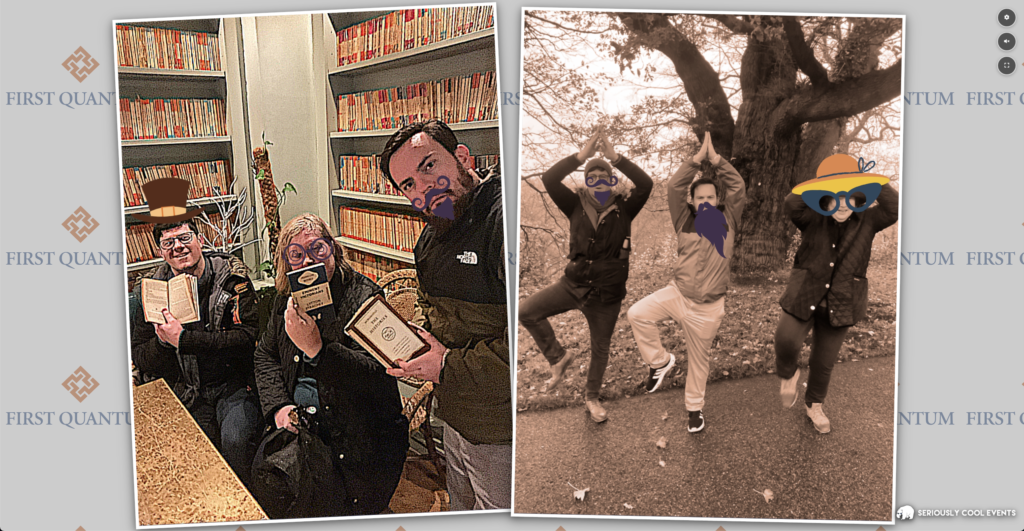
The highest-margin format on the platform — and the one that most clearly separates premium agencies from commodity providers.
Instead of adapting a template, agencies build an original narrative universe around a client's specific world. The story might be rooted in the company's history, an upcoming strategic shift, a fictional scenario that mirrors real business challenges, or an immersive universe created from scratch.
What makes this format different
The experience is not replicable. The client is not buying a day out. They are buying a piece of creative work that happens to be experienced as a game.
Examples from the partner network
- Museum missions with real artefacts as story anchors
- Corporate espionage games set inside the client's own offices
- Detective adventures tied to a company anniversary narrative
- Historical experiences layered onto city walks
- Business simulation games that replay key moments in a company's growth
The agency opportunity: Bespoke experiences are difficult to price-compare. Once an agency has delivered one that genuinely moved an audience, they own that client relationship. Referrals from bespoke projects tend to arrive pre-sold on the concept.
How Agencies Build Recurring Revenue with MooveXR
The most successful MooveXR partners have one thing in common: they do not sell events. They build formats.
A GPS challenge created for one city becomes a template adaptable to any destination in under an hour. A university onboarding game runs every September without being rebuilt. A conference engagement game is replicated across twelve annual client events. A bespoke experience evolves into a productized service sold to a vertical.
The MooveXR platform makes this possible
The no-code experience builder means agencies invest creative time once and redeploy it commercially many times over. White-label branding means every deployment carries the agency's identity, not the platform's. Real-time analytics give agencies data they can bring to client debriefs — which becomes the foundation of the next proposal.
The live leaderboard, visible to all participants during an event, is consistently cited by partners as the single feature that most reliably transforms energy in the room. It is not a technical detail. It is a sales tool.
What the partner network shows
Our most successful partner agencies are not competing on price. They are competing on format depth, creative execution, and the ability to serve corporate clients across multiple format types in the same relationship.
The agencies growing fastest in 2026 are those that have built a portfolio of formats — outdoor and indoor, competitive and collaborative, standard and bespoke — and can match each client to the right one on the first conversation.
That is not a technology advantage. It is a business model advantage — one that MooveXR is uniquely structured to support.


